Just some stones?
The fascinating thing about archaeological research is its continuous pursuit to find new ways decipher and reconstruct ways of life dating back thousands of years. For a long time, stone objects were largely overlooked. As the following analyses of the axe and the set of flint tools demonstrate – quite unjustly!
My name is Roberto Risch and I am teaching prehistoric archaeology at the Autonomous University of Barcelona in Spain for almost 30 years, I believe. And what interests me most specifically are economic structures. How have humans developed economically? And the material I use to determine this is primarily stone tools.
Well, the Neolithic period is defined by polished stones. And thus, there are these entrenched opinions where people think that anything which is a polished stone – rock tools – cannot be from before the Neolithic period. This has turned out to be wrong. Hunter-gatherer societies too had axes, of course, for cutting up animals, felling trees, and digging up roots. Needless to say, these tools have also been polished frequently. And we can see that this already took place in the Mesolithic period. Bad Dürrenberg therefore deeply challenges entrenched opinions.
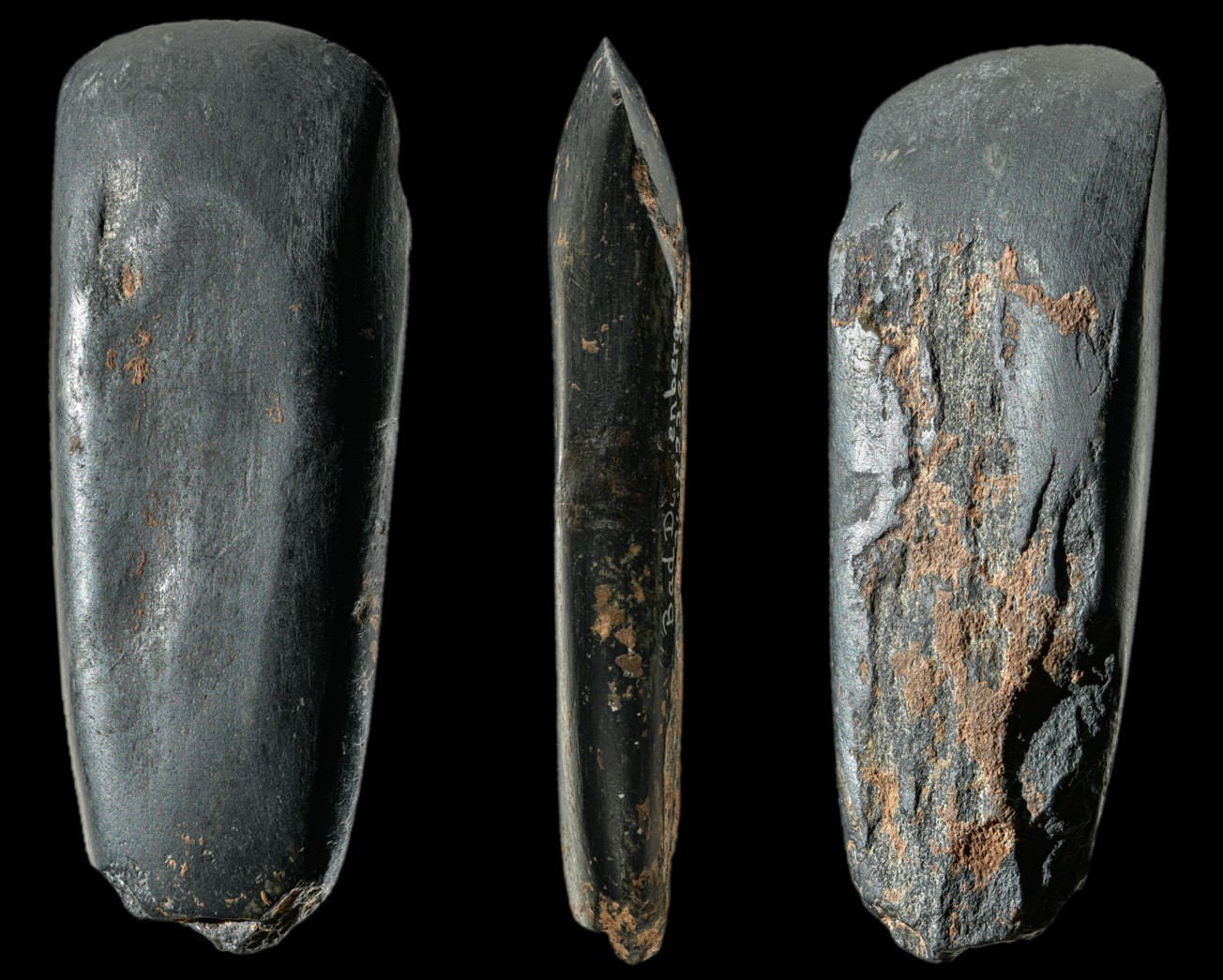
This polished stone axe, also known as a adze, was placed in the shaman’s grave. When viewed from the side, the distinctive shape of the cutting edge is clearly visible.
© LDA Sachsen-Anhalt, photo: Juraj Lipták
The axe is, of course, quite a curious object, not only because it is very, very old, older than expected. The axe is so interesting, on the one hand, because of the raw material. We have been able to determine geochemically that the raw material clearly comes from the Jizera Mountains in north-eastern Bohemia. That's over 200, almost 300 kilometres away. If you have to walk, that's going to take many, many days. And perhaps she also came from Bohemia, perhaps she originates from there, because another stone tool, the anvil for retouching flint, also comes from the Jizera Mountains. Therefore, she has two objects, large, heavy objects, coming from there. Then, when we move on to the use of the axe, it is interesting to note that the use-wear traces reveal various marks that indicate that the axe was like a Swiss Army knife, which could be used, for example, on one side to strip bark from trees, to work wood, not only tree trunks, but twigs, branches, and rods, too. But also, to divide and dismember animals, the different parts of the animal, in order to prepare them for consumption.
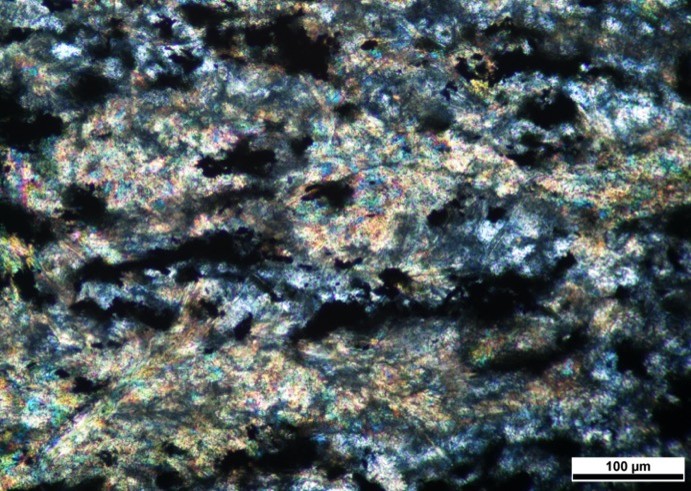
Thin-section analyses were also carried out on the stone axe. This involves taking extremely fine samples of the rock. Under the microscope, the mineral composition can then be assessed at very high magnification.
© Francisco José Martínez & Roberto Risch (UAB)
The flint-working set was found together and also belongs together, as evidenced by the use-wear traces. These are exactly the tools you need to make the microliths, as well as other flakes found in the grave. This means that she possesses the tools; she not only has the products, but she also has the tools to continue producing these items in the afterlife. And the other interesting thing is that the retoucher, she has retouched the blades to make them so sharp, clearly indicates that she is left-handed. Which fits in really well with her pathologies. She must generally have worked more with her left hand or in a left-handed direction in order to avoid difficulties with her problems in the cervical vertebrae.
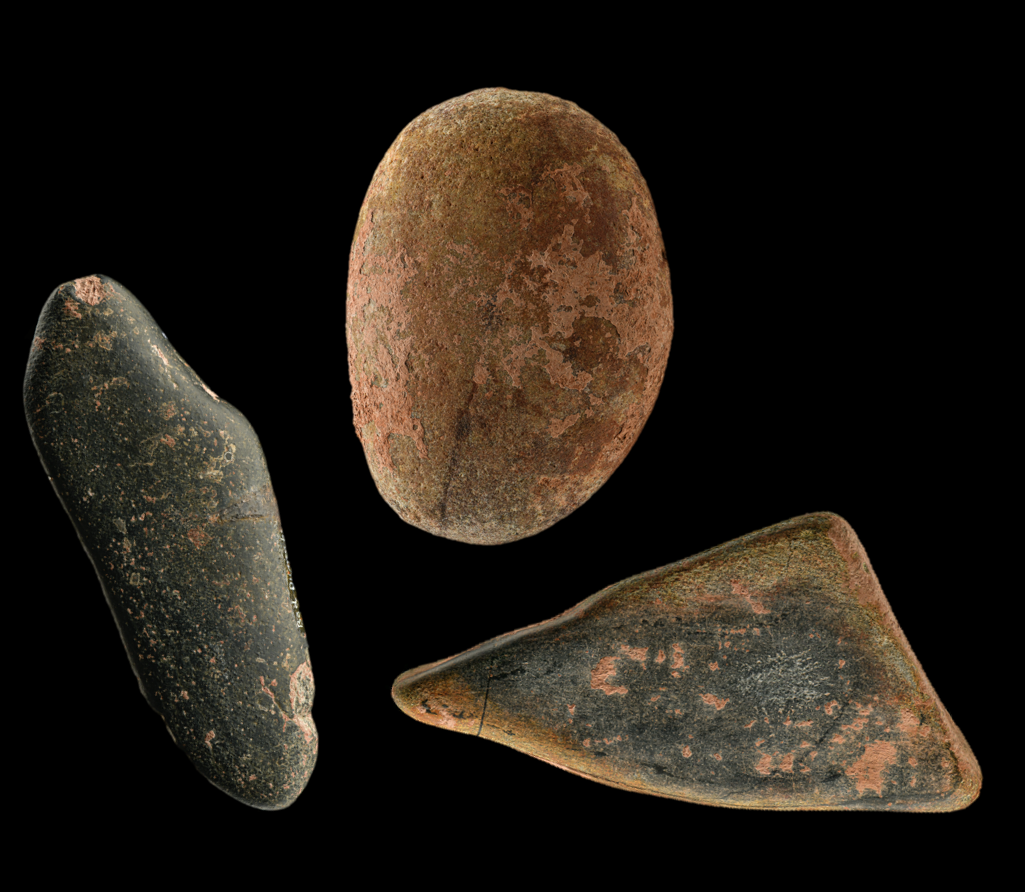
The tool set for making and working flint tools consists of a triangular anvil, an elongated retoucher and a hammer.
© LDA Sachsen-Anhalt, photo: Juraj Lipták
The sandstone slab was analysed for residues, which are remnants of organic material that are often preserved in cracks or crevices of stone tools. These analyses have revealed that on the slab there are remnants of sinews from wild animals. And these sinews were apparently processed with the slab or on the slab. In fact, there is evidence that animal fibres could also be used to make bowstrings, for example.
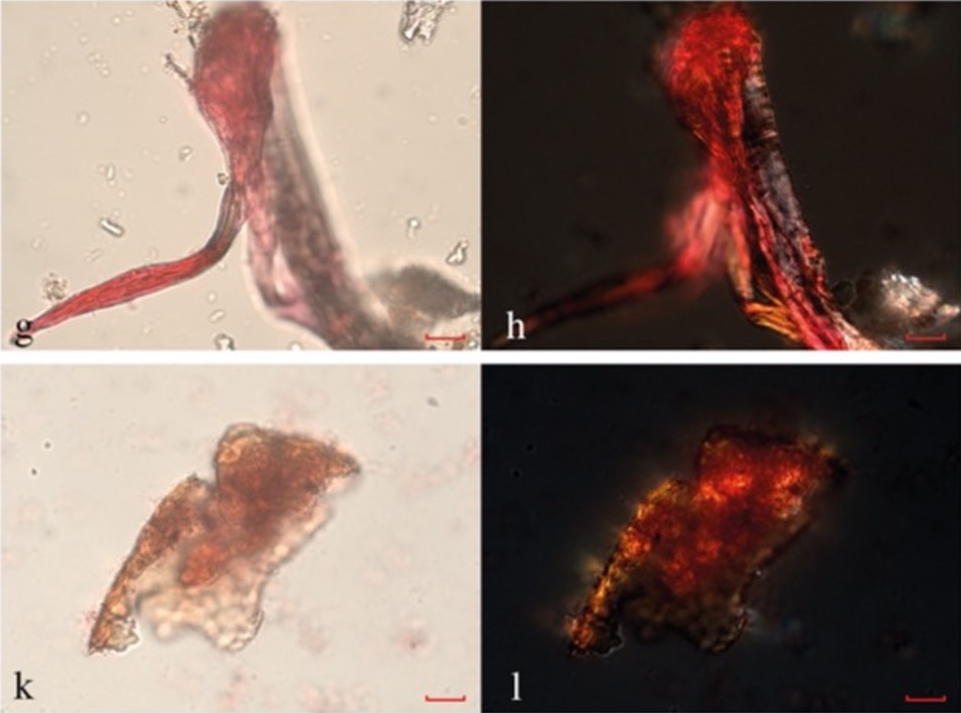
Invisible to the naked eye: microscopic traces of organic material have been preserved on the slab.
© Francisco José Martínez & Roberto Risch (UAB)
The shamaness and her grave naturally reveal an extraordinary personality. For me, it's... let's say, the tools she has, the skills, the technical abilities she has mastered, are of course extraordinary. We have not found such a grave with so much wealth and so many tools in prehistory for a long time. And, of course, the fact that this person happens to be a woman also calls our patriarchal model of society into question.