aDNA – new results
The Max Planck Institute for Evolutionary Anthropology studies human history through comparative research into the genes, culture, cognition, language and social systems of humans and closely related primates. Research scientists like Dr. Wolfgang Haak have been working closly with archaeologists in Halle for some time now and helped the progress in the field.
My name is Wolfgang Haak. I am an archaeogeneticist at the Max Planck Institute for Evolutionary Anthropology in Leipzig. There, we decode and compare the genetic material of individuals from the past, i.e. DNA from human skeletal material that comes from archaeological contexts, i.e. is excavated and recovered.
This is the exception rather than the rule and depends heavily on soil conditions and climate zones. In tropical latitudes, for example, virtually nothing remains. Here in our temperate zones in Central Europe, especially in the rain shadow of the Harz Mountains or on calcareous soils, the conditions for preservation are really very good. Then more to the north, on sandy or acidic soils, preservation is not very good again.
The ancient DNA we obtain, however, is severely damaged and fragmented, so we need to carry out a whole series of steps in clean room laboratories to process the DNA properly and make it suitable for analysis.
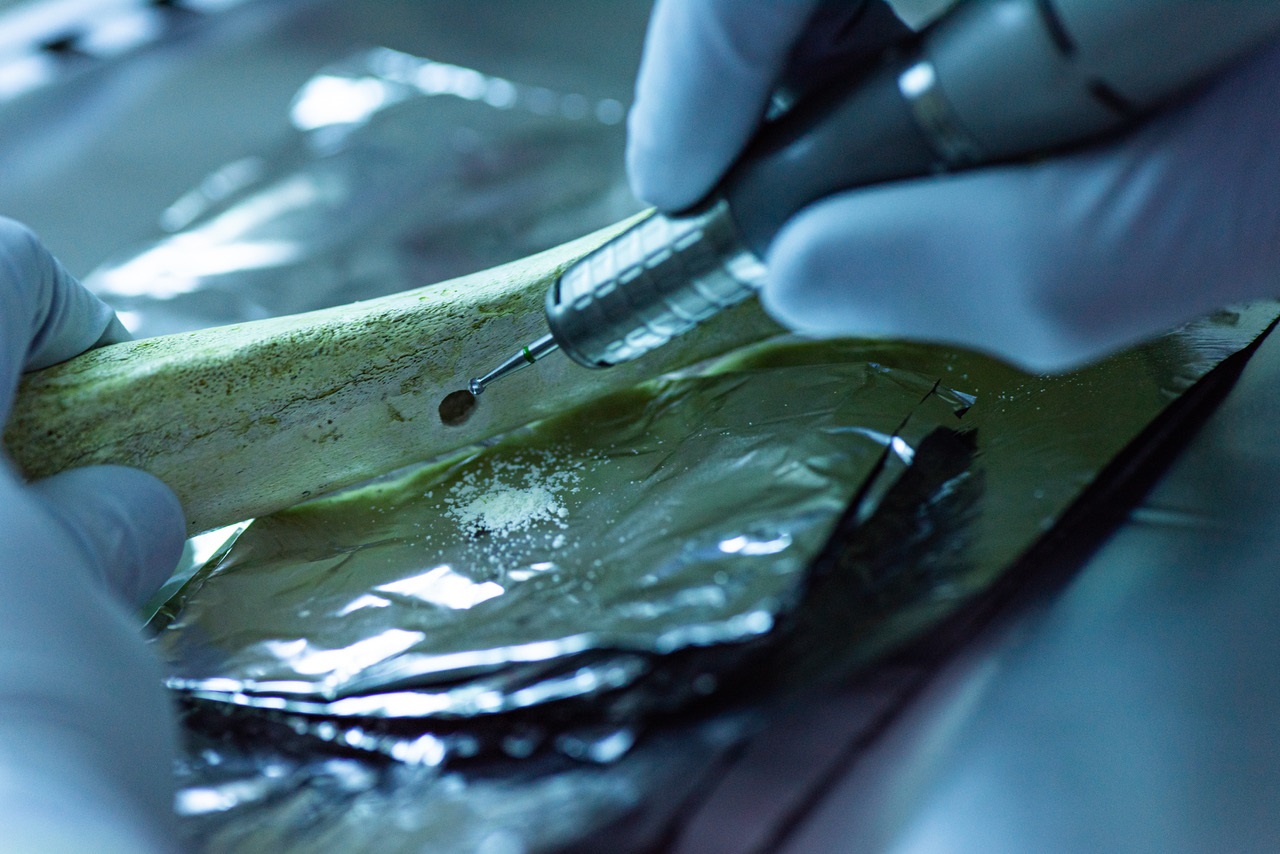
Taking a sample from a bone for the analysis of ancient DNA. © MPI-EVA
For archaeology, I would argue that the analysis of ancient DNA is a really important tool, as it allows us to make direct statements about the people themselves. Where they come from, for example, or what they looked like. Meanwhile we can carry out kinship analyses on entire cemeteries. And this tells us something about social organisation and social structures, i.e. marriage and partner networks or, for example, how many children people had on average in the past.
The analysis of ancient DNA recently yielded sensational results for the Mesolithic period – could you please briefly explain them?
The Mesolithic individuals from Bad Dürrenberg and our region here are part of a larger Central and Western European population group that after the end of the last ice age spread further north from Italy and South-Eastern Europe. We also know by now that the appearance of these hunters and gatherers was characterised by darker skin and hair colour, but in contrast, lighter eye colour than most Europeans today.
You have new insights into the people buried in the Mesolithic grave of Bad Dürrenberg. What did you find particularly exciting?
Yes, first of all, the preservation of the skeleton is truly phenomenal. And that can clearly be seen in the exhibition. Thus, also the DNA preservation was really very good, so that we were able, for example, to reconstruct a complete genome of the shamaness. What is exciting, of course, is the comparative analysis with the three children, who also belong to the grave context. And here we have established that these three children are three brothers, two of whom are actually twins, and who, now it gets complicated, died at different times and may even have been buried secondarily. The adult woman, i.e. once again our shaman, is not the biological mother, but a more distant relative, approximately fifth degree. That could be the second cousin or the great-great-great-grandmother. But then, what is really exciting is this overview of all the findings, especially these amazing archaeological grave goods. And it really is a unique insight into the prehistory of Central Europe.
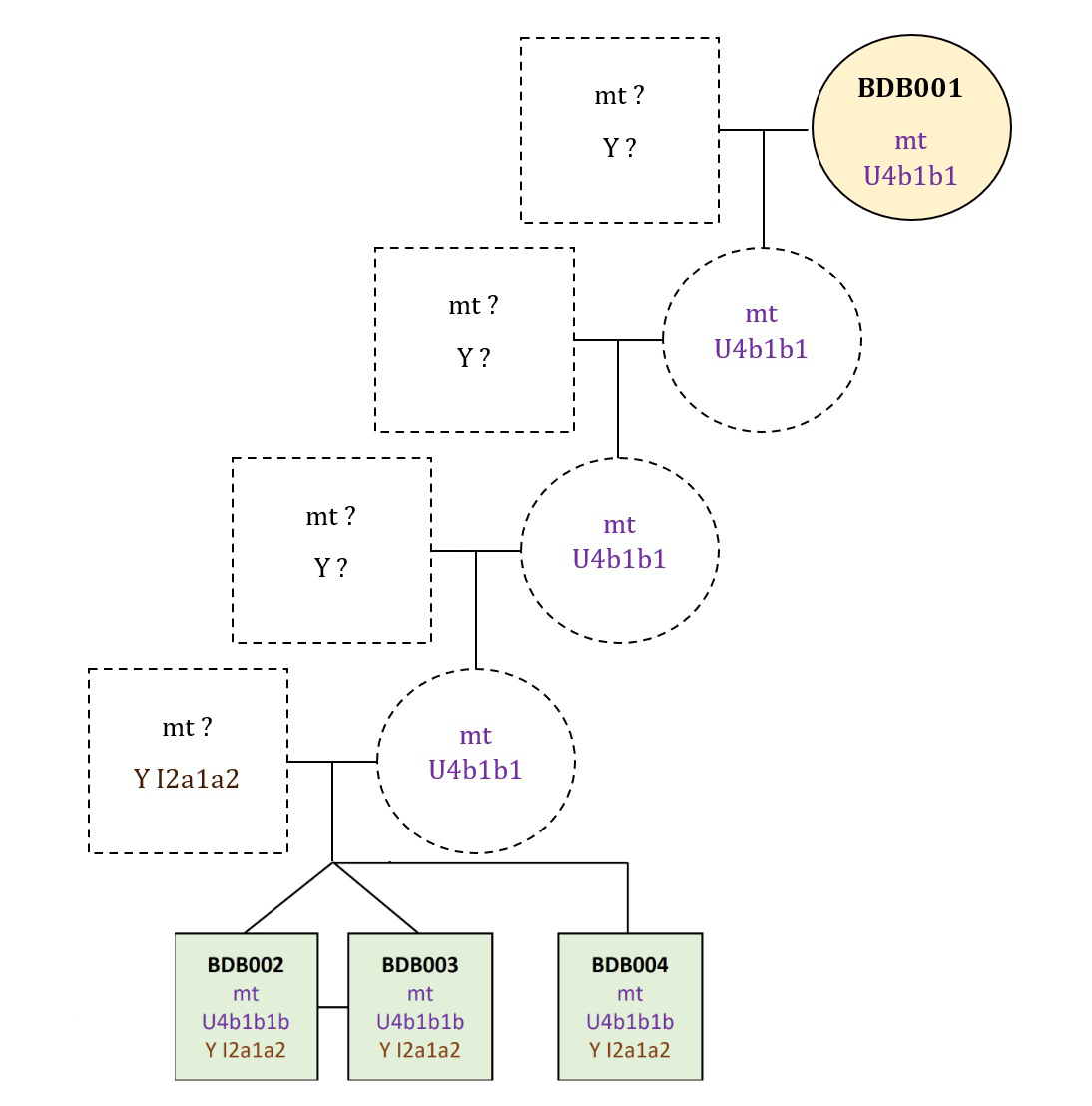
Kinship can sometimes be complicated: the shamaness (yellow circle) could be the great-great-grandmother of the three children (green squares). They would be separated by three generations. There are other possible explanations for a fourth- or fifth-degree relationship – one of which is shown in the exhibition.
© Wolfgang Haak, Max Planck Institute for Evolutionary Anthropology Leipzig